Building Better Market Habits Through Trading
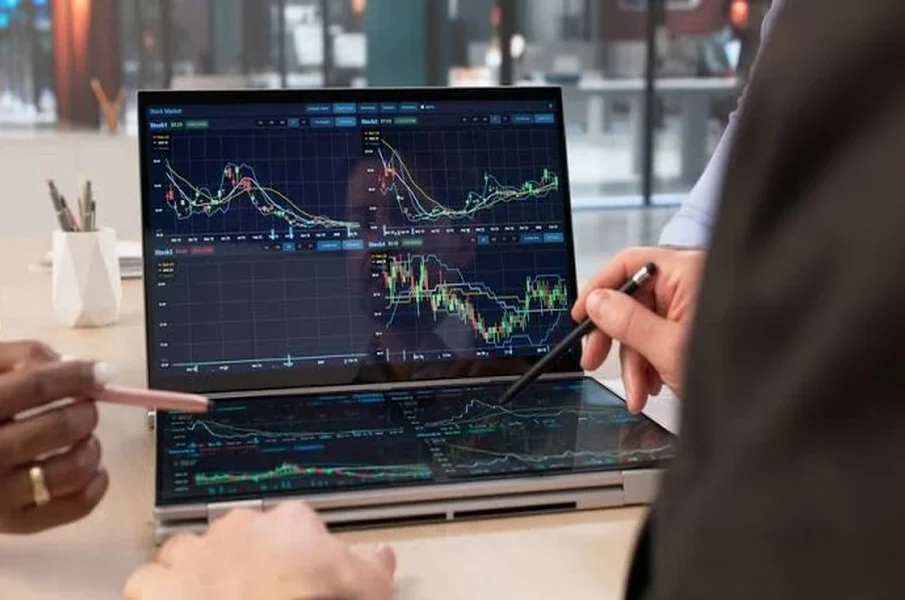
Trading involves buying and selling financial securities with the aim of responding to market opportunities over a defined period. Depending on the approach, a trader may hold a position for minutes, days, weeks or longer, but the basic challenge remains the same: every decision is made in an uncertain market where prices can move against expectations.
For this reason, successful trading is not only about identifying entry points. It also depends on planning, position sizing, risk control, emotional discipline and regular review. A trader who focuses only on potential profit may overlook the equally important question of how much can be lost if the trade fails.
Developing better habits can make Trading more structured and reduce the influence of impulsive decisions.
Define The Reason For Every Trade
A trade should have a clear basis before the order is placed. This could come from price structure, momentum, a technical setup, a market event or another defined strategy.
The important point is that the reason should be identifiable before entry. If a position is opened only because a stock is moving quickly or attracting attention, the trader may struggle to decide what to do when the price changes direction.
A clear setup gives the trade a beginning, a purpose and a basis for review afterward.
Separate Trading Capital From Essential Money
Money used for Trading should ideally be separate from funds required for rent, household expenses, emergency savings or other essential commitments.
Markets can be unpredictable, and even carefully planned trades can result in losses. Using money needed for short-term obligations can create pressure to recover losses quickly, which may lead to even riskier decisions.
Keeping trading capital separate helps protect the broader financial plan and makes it easier to accept losses without affecting essential needs.
Position Size Can Matter More Than Entry Price
Many traders spend a great deal of time trying to find the perfect entry, but position size can have a larger impact on total risk.
A reasonable trade idea can still become dangerous if too much capital is committed to it. On the other hand, a smaller position may make it easier to follow the plan even when the market becomes volatile.
Position size should reflect the amount the trader is prepared to lose if the setup fails rather than the amount of profit hoped for if it succeeds.
Decide The Exit Before Entering
One of the strongest habits in Trading is deciding in advance what would invalidate the trade.
Without a predefined exit, traders may continue holding a losing position simply because they hope the market will recover. This can turn a manageable loss into a much larger one.
An exit plan can include a stop level, technical condition, time-based rule or another criterion aligned with the strategy.
The purpose is not to predict the exact turning point. It is to create a disciplined response when the original trade idea no longer makes sense.
Avoid Increasing Risk After A Loss
A losing trade can create a strong urge to recover the money immediately. This behaviour is often called revenge trading and can lead to larger positions, lower-quality setups and poor decision-making.
The better approach is to return to the original process. If no valid setup exists, there is no requirement to trade simply because the previous position lost money.
A short pause after a significant loss can help restore objectivity and reduce emotional decision-making.
Use A Demat App As A Tool Not A Trigger
A Demat App can make market access easier by allowing users to review holdings, monitor prices and manage supported account functions digitally.
The convenience is useful, but constant access can also encourage unnecessary activity. Traders may begin checking prices repeatedly and feel pressure to act even when their strategy provides no signal.
The app should support execution and monitoring, while the trading plan should determine when action is actually required.
Develop Rules For High Volatility
Some market sessions move much faster than others. News events, economic announcements or broader market shocks can increase volatility and widen the range of price movement.
During such periods, normal position sizes or stop levels may no longer behave in the same way.
Traders should understand whether their strategy is designed for highly volatile conditions. If not, reducing exposure or staying out of the market may be more sensible than forcing a trade.
Knowing when not to trade is part of risk management.
Keep A Trading Journal
A trading journal can help identify patterns that are difficult to notice from memory alone.
Useful details may include the trade setup, entry reason, exit reason, result and emotional state at the time of the decision.
Over several trades, the journal can show whether losses are coming from the strategy itself or from inconsistent execution.
For example, a trader may discover that planned trades perform reasonably well while impulsive trades create most of the losses.
This kind of feedback can support better discipline.
Focus On Process Instead Of Individual Outcomes
A profitable trade is not always a good trade, and a losing trade is not always a bad one.
A poorly planned position can make money because the market happened to move favourably. A carefully executed trade can lose because uncertainty is unavoidable.
Evaluating only the final profit or loss can therefore be misleading.
A better review asks whether the trader followed the rules, controlled risk and executed the strategy as intended.
Over time, process quality is more useful than judging skill from one isolated trade.
Do Not Change Strategy After Every Loss
No trading method works perfectly in every market condition. A strategy may experience a series of losses even when it has been applied correctly.
Constantly switching approaches after each unsuccessful trade can prevent the trader from understanding whether any strategy actually has an edge.
Changes should be based on a meaningful review of a larger sample of trades rather than an emotional reaction to one difficult session.
Consistency makes performance easier to evaluate.
Treat Leverage With Extra Caution
Leverage can increase market exposure using less capital, but it also magnifies losses.
A relatively small price movement against the position can create a much larger financial impact when leverage is involved.
Traders should understand exactly how leveraged products work before using them and should avoid assuming that higher exposure automatically creates better opportunities.
Risk limits become even more important when leverage is part of the strategy.
Avoid Trading Too Many Instruments At Once
Following too many stocks, indices or other instruments can reduce focus.
Each additional position requires monitoring, risk management and decision-making. Managing several trades simultaneously may make it easier to miss important changes or exceed the intended total exposure.
A more focused watchlist can help traders understand the behaviour of the instruments they follow and make decisions with greater consistency.
More opportunities do not necessarily lead to better results.
Costs Should Be Included In Every Strategy
Trading involves more than entry and exit prices. Brokerage, statutory charges, taxes and other applicable transaction costs can affect overall performance.
These costs are particularly important for strategies involving frequent trades or small expected profits per transaction.
A strategy that appears profitable before costs may produce very different results once all charges are included.
Traders should therefore evaluate performance on a net basis rather than relying only on gross gains.
Set A Maximum Daily Or Weekly Loss Limit
One useful risk-control habit is deciding how much total loss is acceptable over a defined period.
If that limit is reached, the trader stops and reviews what happened rather than continuing to trade emotionally.
The exact limit will depend on the strategy, capital and individual risk tolerance, but the principle helps prevent one difficult session from causing disproportionate damage.
Loss limits create a clear boundary when decision quality begins to deteriorate.
Step Away When The Setup Is Missing
Trading does not require constant participation.
Some days may provide several valid opportunities, while other sessions may offer none.
Forcing a trade simply because the market is open can lead to low-quality decisions. Waiting for conditions that match the strategy is often part of disciplined execution.
Cash is also a position when the market does not fit the plan.
Conclusion
Trading becomes more structured when decisions are based on predefined rules rather than short-term emotion. A clear setup, controlled position size, planned exit and consistent review process can help traders manage uncertainty more effectively.
Good trading habits also include separating trading capital from essential money, limiting total losses, accounting for transaction costs and avoiding unnecessary activity during unsuitable market conditions.
Anyone participating through a Demat account should remember that digital access can make execution easier, but disciplined risk management remains essential because market losses are always possible.
FAQs
1. Is Trading suitable for beginners?
Yes, but beginners should first understand market basics, order types and risk management before committing significant capital.
2. Can Trading guarantee regular income?
No, Trading involves uncertainty and can result in both profits and losses.
3. Is a trading journal useful?
Yes, it can help identify repeated mistakes, strengths and weaknesses in the trading process.
4. Should I trade every day?
No, traders should act only when market conditions match their defined strategy.
5. Does leverage increase Trading risk?
Yes, leverage can magnify both gains and losses, so it requires careful risk control.